Clinicians

Lightening the Load: Addressing the Pressures on GPs in Diagnosing Cancer

Dec 20, 2024
10 min read
Listen to this article

WRITER: C the Signs

Jump To
Table of Content
C the Signs

C the Signs is an MHRA Class I medical device using AI to identify patients at risk of cancer at the earliest and most treatable stage. Created by doctors and trusted across the NHS, it’s transforming how the world detects cancer - giving every patient the chance to survive, and the time to live.

This is how we defy time. This is how we rewrite the possible.

Learn more

Diagnosing cancer early is one of the greatest challenges faced by GPs. With vague and non-specific symptoms, a lack of time in consultations, large patient caseloads, and complex cancer guidelines, the burden on GPs is immense. Add to this the administrative pressures of coordinating referrals and ensuring diagnostic pathways are followed, all whilst making sure not to refer inappropriately, and it’s clear why early cancer detection is as emotionally taxing as it is critical.

In this environment, GPs are asked to do the near-impossible: spot subtle early signs of cancer that can easily be mistaken for more benign conditions—all within the constraints of a 10-minute appointment. For many, this balancing act takes a toll, contributing to stress, burnout, and the constant fear of missing a life-threatening diagnosis.

The High-Stakes Nature of Early Detection

Cancer’s early signs are notoriously difficult to pinpoint. Symptoms like fatigue, unexplained weight loss, or vague abdominal pain can overlap with countless other conditions. GPs must sift through these clues, often relying on incomplete information, and decide whether further investigation is warranted.

Adding to the pressure is the sheer volume of cases GPs handle daily. With limited time per patient, it’s easy for even experienced practitioners to feel overwhelmed by the weight of these decisions. And then there’s the administrative side: navigating referral systems, updating records, and ensuring compliance with national guidelines.

The stakes are incredibly high. Delays in diagnosis can lead to advanced-stage cancers, where treatment options are fewer, less effective, and more invasive. For patients, this can mean reduced survival chances. For GPs, the emotional burden of missed or delayed diagnoses is profound.

A Tool to Ease the Pressure: How C the Signs Supports GPs

While GPs shoulder this immense responsibility, C the Signs is stepping in to provide much-needed support. Rather than replacing the expertise of doctors, this AI-driven platform acts as a second pair of eyes, helping GPs identify cancer risks quickly and accurately.

C the Signs analyses a wide range of patient data—symptoms, demographics, and risk factors—and provides tailored diagnostic pathways within seconds. It alleviates the mental load of memorising extensive cancer guidelines, ensuring that no critical detail is overlooked. For GPs, this means faster, evidence-based decisions and more time to focus on their patients.

With enhanced patient safety-netting and safer workflows, C the Signs supports GPs in effectively monitoring patients who may be at risk of cancer, ensuring timely follow-ups and reducing the chances of missed or delayed diagnoses.

Proven Impact on Detection Accuracy
The platform’s impact speaks for itself. In a recent SNEE ICB study, C the Signs facilitated a 12.3% increase in cancer detection rates, whilst showing no notable increase in diagnostic or referral activities.

For GPs, this means fewer delays, less second-guessing, and a smoother pathway to getting their patients the care they need. For patients, it’s a matter of life and death—earlier diagnosis significantly increases survival rates and opens the door to less invasive treatments.

A Lifeline for GPs

By reducing the cognitive and administrative pressures of cancer detection, C the Signs is helping to combat the burnout that’s becoming all too common in primary care. GPs can work with greater peace of mind, confident that they’re making the best decisions for their patients.

Early cancer detection will always be a challenging aspect of primary care, but with C the Signs, GPs have a powerful ally. It’s not just about saving lives—it’s about supporting the people who dedicate their careers to doing so.

Stay in the loop!
Subscribe to get our weekly update.
Thank you! Your submission has been received!
Oops! Something went wrong while submitting the form.
play icon
Press Release

C the Signs Delivers 800%+ ROI and Earlier Cancer Diagnosis Across the NHS

Oct 29, 2025

08 min read

An independent evaluation commissioned by Health Innovation East, presented at the ASCO Care Quality Symposium 2025 and published in JCO Oncology Practice, has found that our work to support earlier cancer diagnosis delivered an 808% return on investment (ROI) for the NHS.

The study showed that implementation across Suffolk and North East Essex Integrated Care Board (ICB) led to 272 patients being diagnosed earlier and £1.5 million in annual cost savings - clear evidence that innovation within primary care can improve outcomes while releasing valuable capacity across the system.

Helping Clinicians Detect Cancer Sooner

We partner with NHS organisations to help GPs identify patients at risk of cancer earlier - analysing routinely collected clinical data to highlight subtle patterns that might otherwise be missed.

By supporting accurate triage and reducing unnecessary urgent suspected cancer (USC) referrals, our work enables earlier diagnosis, eases pressure on diagnostic services, and helps clinicians focus on the patients who need urgent investigation.

“This study provides clear evidence that innovation can make a measurable impact on cancer care,” said Dr Miles Payling, Chief Scientific Officer at C the Signs. “An 800% return on investment means we’re improving early diagnosis and helping the NHS use its resources more efficiently - a practical example of technology making care better for both patients and clinicians.”

Evidence of Earlier Detection

The findings build on earlier research, also published in JCO Oncology Practice, which showed that GP practices using our system achieved a 12% increase in cancer detection rates - from 58.7% to 66.0% - without increasing referral activity.

Together, these studies confirm that our approach helps clinicians detect more cancers at an earlier stage while maintaining stable referral volumes - supporting NHS priorities around early diagnosis, productivity, and elective recovery.

“Early diagnosis gives patients the best chance of successful treatment,” said Dr Seema Dadhania, Clinical Oncologist at Imperial College London and lead author of the study. “This work is helping primary care clinicians identify subtle cancer presentations that can otherwise be missed - improving detection while reducing unnecessary referrals.”

Scaling Across the East of England

Following the success in Suffolk and North East Essex, Health Innovation East has supported expansion across Norfolk and Waveney ICB, with further roll-outs planned across the East of England.

Driving Sustainable Early Diagnosis

Across the NHS, our technology now supports more than 1,500 GP practices, with real-world data showing improvements in cancer detection rates, emergency presentation reduction, and time to diagnosis.

By embedding decision support directly into everyday care, we’re helping the NHS deliver earlier diagnosis, better outcomes for patients, and a more sustainable use of resources - bringing the health service closer to its ambition of diagnosing 75% of cancers at stages 1 or 2.

Study Reference

Dadhania S., Payling M., Moss M., Gordon J., Bakshi B. (2025).
Implementing an AI triage platform for identification and management of patients suspected of cancer risk to improve elective recovery post-pandemic.
JCO Oncology Practice, 21(10_suppl), 32.
Presented at: ASCO Care Quality Symposium 2025
Commissioned by: Health Innovation East
Setting: Suffolk and North East Essex ICB (population 1.1 million)
Findings: £1.5 million annual savings | 808% ROI | 272 patients diagnosed earlier | 12,374 USC referrals avoided

For media requests, interviews, or speaking opportunities, please contact:
social@cthesigns.com / press@cthesigns.com

play icon
GP Practices

MP Joe Powell C's the Signs in Kensington

Oct 20, 2025

08 min read

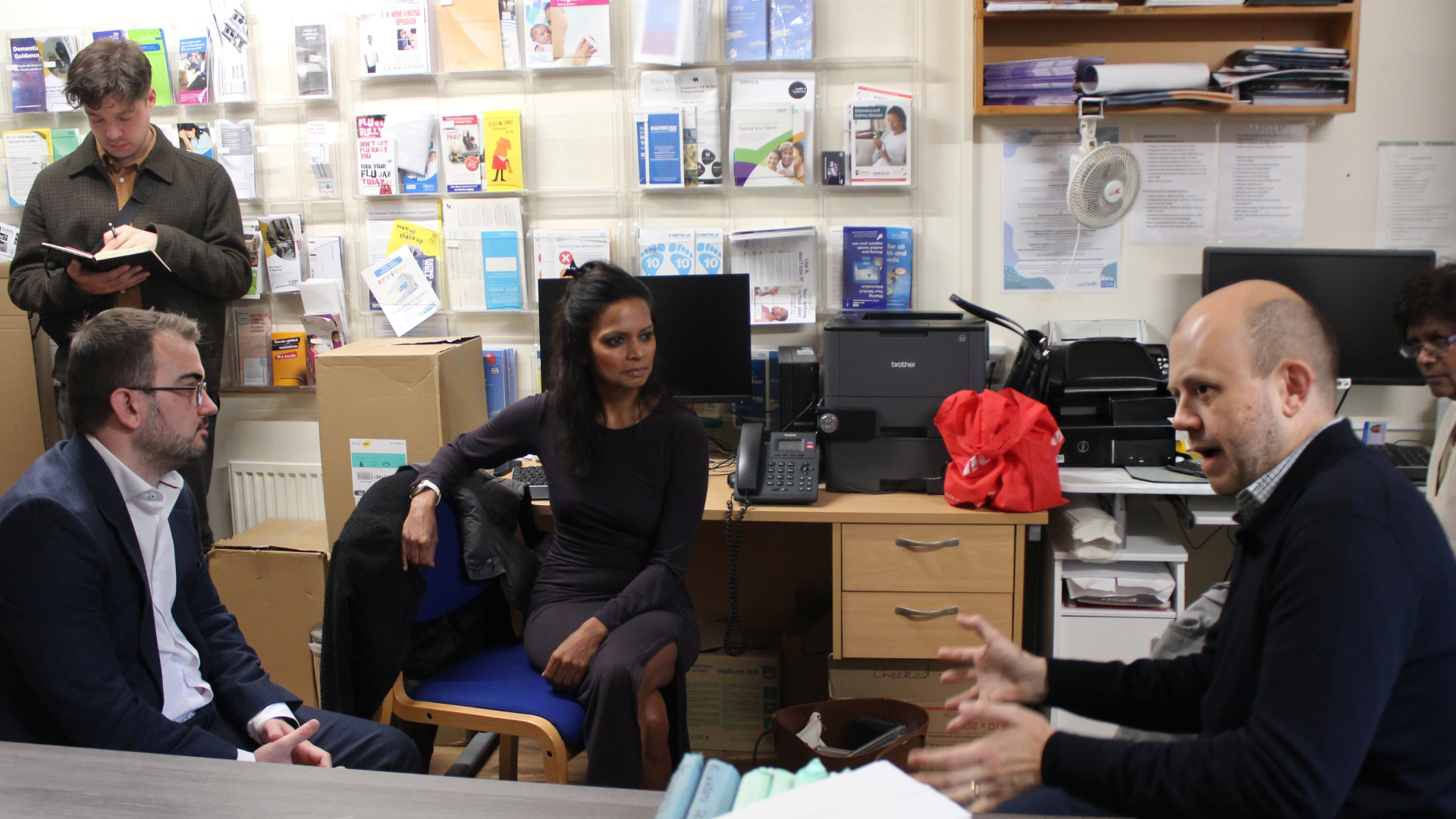
Earlier this month, Joe Powell, Member of Parliament for Kensington and Bayswater, visited Golborne Medical Centre to see how local GPs are using C the Signs.

Hosted by Dr Meena Nathan and Dr Thushara Goonewardene, the visit brought together community clinicians, C the Signs Co-Founder Dr Miles Payling, and local leaders to explore how innovation, teamwork, and community engagement are transforming early diagnosis in one of London’s most diverse communities.

Transforming Early Diagnosis in Primary Care

Inside the busy surgery, clinicians demonstrated how C the Signs supports decision-making in real time - analysing patient records, symptoms, and risk factors to surface hidden indicators of cancer during routine appointments.

“We’re still early in the rollout, but already it’s helping us prioritise patients who might otherwise slip through the cracks,” one clinician shared.

C the Signs’ AI models - validated across more than 500,000 patient records - have achieved 99% sensitivity for cancer detection and 94% accuracy in predicting tumour origin. In real-world NHS evaluations, practices using C the Signs have seen a 50% reduction in emergency cancer diagnoses and a 20–50% improvement in time to diagnosis.

Discussions during the visit focused on addressing barriers such as low screening uptake and under-detection in harder-to-spot cancers like pancreatic and lung - areas where C the Signs’ AI-driven case finding is already being deployed across the NHS.

Community, Compassion and Continuity

Beyond technology, clinicians emphasised the human side of early diagnosis.
One GP described how her team intervened when a patient’s surgery was nearly cancelled due to language barriers:

“She came in completely distraught. We stepped in, made the calls, got her rebooked. That kind of support takes time - but it changes everything.”

The Golborne team highlighted how community partnerships and culturally sensitive communication remain critical to ensuring that early diagnosis reaches every patient.

“It all starts with education,” said another clinician. “We saw what community groups achieved during the pandemic - those links still exist, but time is our biggest limitation.”
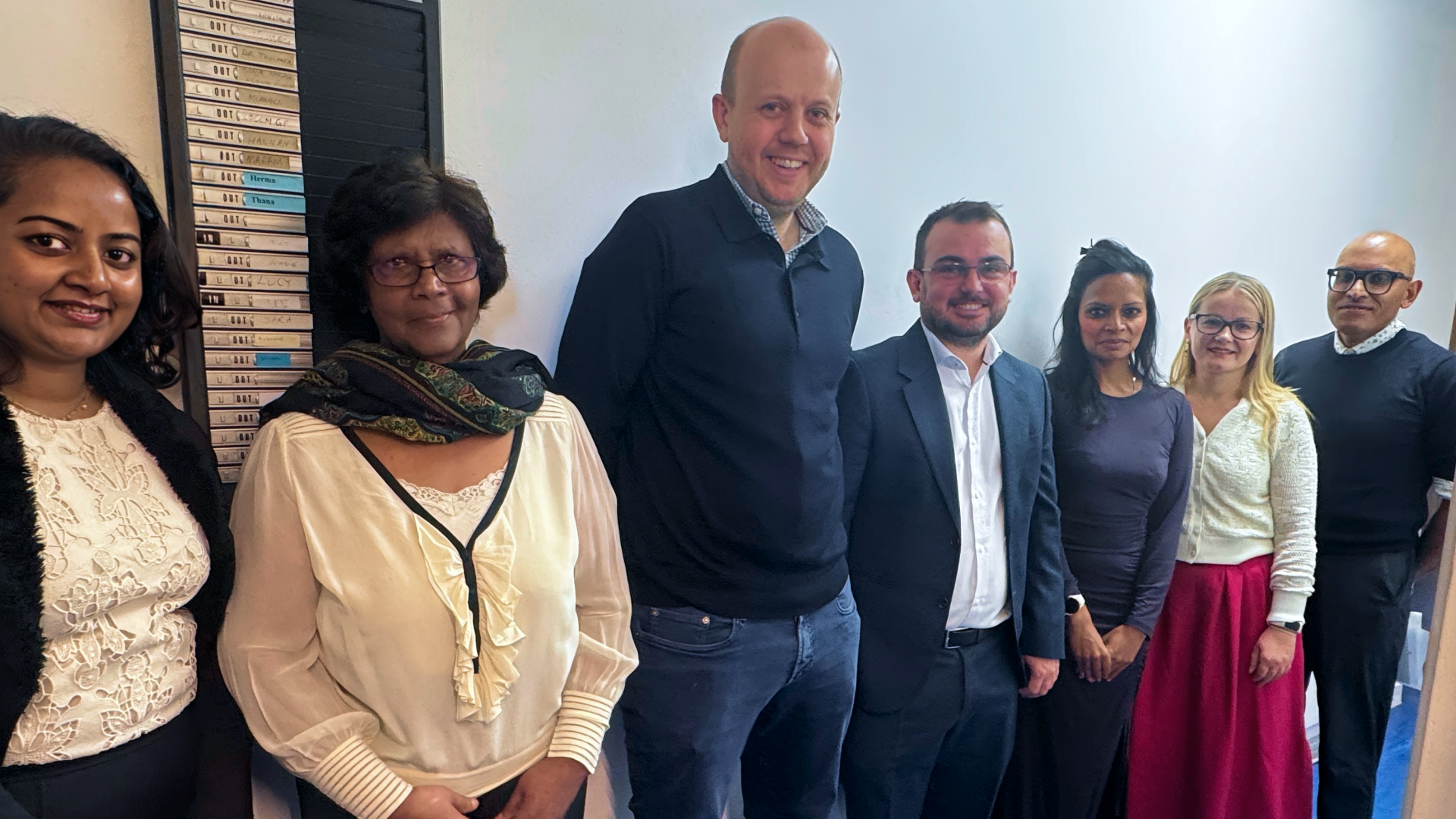
Golborne Medical Practice - Dr Miles Payling, Dr Meena Nathan and Joe Powell MP for Kensington and Bayswater

Facing the Pressures in Primary Care

The visit also revealed the realities of delivering proactive, preventative care in a high-demand urban setting. With limited space, the team frequently repurposes rooms - even corridors - to ensure every patient is seen. Expansion plans are already underway to increase clinical capacity next year.

Despite these pressures, Golborne’s clinicians continue to innovate, integrating mental health support, opportunistic health checks, and early-diagnosis prompts into every consultation.

“Our patients work with us,” said a member of the Golborne team. “They know we’re doing our best - and they appreciate that.”

Partnership Beyond the Practice

Speaking after the visit, Joe Powell MP emphasised the importance of collaboration between community, technology, and health services:

“What’s happening here in Golborne - between GPs, community groups, and innovators like C the Signs - is exactly the kind of joined-up approach we need to deliver earlier diagnosis and better care.”

He also called for stronger links across the Integrated Care Board (ICB) and better alignment between voluntary and statutory services to tackle the wider determinants of health - from housing to mental wellbeing.

Dr Miles Payling, Co-Founder and Chief Scientific Officer at C the Signs, added:

“Early diagnosis begins in communities - in everyday conversations between GPs and patients, supported by technology that empowers those moments. Every 22 minutes, C the Signs helps detect another patient with cancer. What’s happening in Golborne shows how innovation can give patients back the one thing cancer takes away: time.”

Why It Matters

C the Signs was built by NHS doctors to work within existing systems and integrate seamlessly with primary-care workflows. Today, it is commissioned in over 1,500 GP practices, covering more than 10 million patient lives across the UK.

By enabling faster, more accurate triage and supporting clinicians at the point of care, the platform is redefining how cancer is detected - turning complex data into actionable insight and giving every patient a better chance of being seen in time.

play icon
C the Signs Conference 2025

Cancer in Numbers: Why Interception Matters with Dr Miles Payling

Oct 17, 2025

08 min read

At the inaugural C the Signs Conference, Dr Miles Payling - Co-Founder and Chief Scientific Officer - delivered a message that captured the spirit of the movement redefining how the world detects cancer.

In a talk that fused science with humanity, he spoke not only about technology, but about time and how every second counts in the journey to early diagnosis.

“We can’t afford to wait for symptoms to become obvious. Every moment matters - because every moment lost is a choice, a treatment, a life that could have been saved.”

The Why - Where It All Began

Miles began with the story that shaped C the Signs’ mission. As an NHS doctor, he met a patient named Joe - fit, active, and 60 years old. After several GP visits with vague symptoms, Joe arrived at A&E jaundiced and weak. Scans confirmed metastatic pancreatic cancer. Three weeks later, Joe died.

“Joe never asked, why do I have cancer? What he asked was, why was my cancer picked up so late?

That single question became the foundation of C the Signs - a platform designed to detect cancer early enough to change the outcome .

Today, that vision saves time and lives - with a patient with cancer detected every 22 minutes.

Why Early Detection Still Fails Too Many

Cancer remains the leading cause of death in the UK, with survival determined by the stage at diagnosis.

For breast cancer, five-year survival is 97.9 % at stage 1 but just 26.2 % at stage 4.
For bowel cancer, it falls from 91.7 % to 10.3 % .
Yet only 58.7 % of patients are diagnosed at early stages .

In primary care - where 90 % of all NHS patient contact takes place - GPs face impossible pressures: 10-minute consultations, thousands of patients, and on average just eight new cancer diagnoses a year .

“The problem isn’t people. It’s knowledge. We need to give every GP the power of precision - instantly.”

The Innovation - Redefining What’s Possible

C the Signs is an AI-powered, pan-cancer platform integrated directly with electronic health records. In under 30 seconds, it assesses risk, predicts tumour origin, and guides clinicians to the right diagnostic pathway across 100+ cancer types.

Real-world evaluations across the NHS have shown:

  • 99 % sensitivity - finding nearly all patients with cancer
  • 99 % negative predictive value - safely ruling out risk
  • 94 % accuracy in predicting tumour origin
  • 50 % reduction in emergency cancer presentations
  • 21 % faster time-to-diagnosis - from 85 days to 67 days

Each figure represents a human life identified earlier, a family spared uncertainty, and a system made stronger.

The Movement - Honouring Jess’s Rule

Miles closed his speech by reflecting on Jessica Brady’s story - a 27-year-old whose symptoms were missed, leading to a late diagnosis and preventable loss .

To honour her legacy, C the Signs is implementing “Jess’s Rule” - a feature that automatically alerts clinicians when a patient presents three times or more with unresolved symptoms, and triggers a cancer risk assessment .

“We can turn tragedy into transformation - by ensuring that no patient is ever overlooked again.”

Together, we can make early cancer detection a standard for all, not a privilege for some - and give every person the time they deserve.

play icon
Symptoms

Supporting GPs To Recognise Cancer Symptoms Sooner

Oct 15, 2025

08 min read

For most patients, their GP is the starting point on the path to early diagnosis.

Every year, GPs across the UK see millions of people with symptoms that could - but rarely do - indicate cancer. Recognising which of those subtle signs matter most is critical. At C the Signs, we’re helping GPs identify cancer symptoms sooner, combining AI-driven clinical insight with trusted medical evidence to turn uncertainty into action.

The Challenge of Early Cancer Diagnosis in Primary Care

Cancer doesn’t always present clearly.

A persistent cough. Fatigue. Unexplained weight loss.

These are symptoms GPs encounter daily - most often caused by benign conditions, but sometimes the earliest indicators of cancer.

With over 200 cancer types and thousands of possible symptom combinations, even the most experienced clinicians face a challenge: balancing vigilance with efficiency in a 10-minute consultation.

That’s where C the Signs comes in - using data, evidence, and artificial intelligence to ensure no symptom is overlooked.

Turning Complexity Into Clarity

The C the Signs platform analyses symptoms, risk factors, demographics, and clinical data in seconds — highlighting when a patient may be at risk and guiding the clinician to the right next step.

By integrating directly with EMIS and SystmOne, the platform works seamlessly within NHS systems, enabling GPs to:

  • Quickly cross-check symptoms against validated cancer pathways
  • Identify rare or non-specific presentations earlier
  • Refer patients confidently to the most appropriate service

This means patients at risk of cancer receive investigations and treatment sooner — when outcomes are most favourable.

Building Confidence Through Clinical Support

C the Signs isn’t just a platform - it’s built to work with clinicians, not instead of them. It brings together the best available evidence, national guidelines, and AI-powered insight into one clear, easy-to-use interface.

That means:

  • Less diagnostic uncertainty
  • More consistent, evidence-based referrals
  • Improved patient safety and continuity of care
“C the Signs helps me confirm when my instincts are right — and sometimes, when they’re not.
It ensures that no patient slips through the net.”
GP, North West England

Driving Early Diagnosis Across the NHS

By supporting GPs to recognise cancer symptoms earlier, C the Signs contributes directly to the NHS Long Term Plan ambition:

Diagnose 75% of cancers at stage 1 or 2 by 2028.

Across Primary Care Networks, Cancer Alliances, and Integrated Care Systems, GPs using C the Signs are already seeing measurable impact - with:

  • More early referrals
  • Faster diagnostic timelines
  • Improved accuracy in identifying patients with cancer

Each earlier diagnosis means more patients receiving treatment when it can make the greatest difference - saving time, cost, and lives.

Beyond Technology - A Partnership for Change

Technology alone doesn’t transform healthcare - people do.

That’s why we work closely with GPs, practice nurses, and PCN teams to design and continually refine the platform based on real-world feedback.

Together, we’re transforming early cancer diagnosis from a reactive process into a proactive standard of care - one where every symptom is seen, every risk assessed, and every patient given the best possible chance.

play icon
C the Signs

How C the Signs Integrates with EMIS and SystmOne to Save Lives

Oct 15, 2025

08 min read

In primary care, time matters. Every consultation, every click, and every decision can shape a patient’s outcome - especially when it comes to cancer.

That’s why C the Signs has been designed to integrate seamlessly with EMIS and SystmOne, enabling GPs to detect cancer earlier without adding extra steps to their daily workflow.

Integration That Fits Naturally Into Primary Care

For most GPs, EMIS and SystmOne are the backbone of daily practice - holding every patient’s medical history, symptoms, and risk factors. C the Signs connects directly into these systems, transforming that information into real-time, actionable insight.

Through this integration, clinicians can:

  • Instantly access C the Signs from within EMIS or SystmOne
  • Automatically analyse patient symptoms, demographics, and clinical data
  • Receive immediate, evidence-based guidance on cancer risk and next steps

No extra software. No switching screens. No duplicate data entry. Just faster, smarter decision-making - at the point of care.

Reducing the Time to Diagnosis

C the Signs is built to make early diagnosis simple, safe, and scalable. By embedding directly into the GP’s existing system, it eliminates delays that often occur when technology sits outside the electronic medical record.

This seamless workflow means:

  • Referrals can be generated instantly, including under the Faster Diagnosis Standard (FDS), formerly known as the two-week wait (2WW).
  • Patient data flows automatically, avoiding missed information or transcription errors.
  • Audit trails and outcomes are logged for research, safety, and quality improvement.

In practices where C the Signs is live, clinicians are already finding cancer faster and more accurately - with earlier referrals, improved outcomes, and a reduced administrative burden.

Driving Early Diagnosis Across the NHS

C the Signs integrates directly with:

  • EMIS Web - used by around 70% of GP practices in England
  • SystmOne - supporting thousands of GP practices, community services, and hospitals

Together, these integrations make the platform available to millions of patients across the NHS — turning data into action and ensuring that every GP, regardless of location, has access to the same level of intelligent support.

Seamless, Safe, and Clinically Validated

Every integration is developed and maintained in line with:

  • NHS Digital standards
  • Clinical Safety DCB0129/0160 accreditation
  • Information Governance and GDPR compliance

This ensures that C the Signs operates to the highest standards of clinical safety, patient privacy, and system performance — delivering technology clinicians can trust.

Real Impact, Real Patients

“The ability to use C the Signs directly in EMIS has completely changed how quickly I can act.
I can review a patient’s symptoms, get the cancer risk assessment instantly, and make the referral — all in one place.”
GP, South East England

Every integration helps remove barriers between data and diagnosis - giving clinicians back time and patients back their best chance of survival.

About C the Signs

C the Signs is an AI-powered clinical platform that helps healthcare professionals identify patients at risk of cancer earlier, faster, and more accurately.

Founded by NHS doctors, the platform analyses over 100 cancer types using evidence-based algorithms and integrates directly into GP workflows through EMIS, SystmOne, and Vision.

By embedding early detection tools into everyday care, C the Signs is helping achieve the NHS’s ambition:

75% of cancers diagnosed at stage 1 or 2 by 2028.
play icon
C the Signs

How Does C the Signs Work?

Oct 3, 2025

08 min read

Every minute counts when it comes to cancer.
For most patients, early detection means faster treatment, better outcomes, and more lives saved.

Yet for GPs, recognising which of the thousands of daily symptoms could indicate cancer isn’t simple. That’s where C the Signs comes in - an AI-powered clinical platform that helps healthcare professionals identify patients at risk of cancer earlier, faster, and more accurately.

The Challenge: Spotting the Earliest Signs of Cancer

Cancer rarely looks the same twice. Two patients with the same disease can present in completely different ways - fatigue in one, back pain in another.

With over 100 cancer types and countless symptom combinations, even the most experienced GP can face uncertainty.

Traditional guidelines can be fragmented or difficult to navigate in a busy primary care setting.
C the Signs bridges that gap - bringing together national guidance, clinical research, and local pathways into one intelligent platform that supports decision-making in real time.

The Solution: AI-Driven Clinical Support

C the Signs analyses patient data, demographics, risk factors, and symptoms to calculate the probability of cancer - then guides the GP to the right next step.

It doesn’t replace clinical judgement.
It enhances it.

Here’s how it works in real time:

  1. Input – The GP enters symptoms, risk factors, or test results directly within EMIS, SystmOne, or Vision.
  2. Analyse – The platform’s AI interprets this data using national guidelines, research evidence, and validated clinical pathways.
  3. Act – Within seconds, C the Signs provides a clear recommendation - suggesting the most appropriate referral, investigation, or next action, tailored to each individual patient.

Everything happens seamlessly, within the GP’s existing workflow - saving valuable time and ensuring no symptom is overlooked.

C the Signs Platform

Built on Evidence, Backed by Research

C the Signs doesn’t guess - it’s grounded in science.

Our algorithms are validated against national cancer guidelines and peer-reviewed research, and informed by real-world data from NHS England partners, Cancer Alliances, and Health Innovation Networks.

Every insight is continually refined through clinical feedback and new evidence, ensuring the platform remains aligned with the most up-to-date pathways in early diagnosis.

Seamless Integration with NHS Systems

Time is one of the most valuable resources in primary care.
That’s why C the Signs integrates directly with EMIS, SystmOne, and Vision, requiring no extra logins or manual data entry.

The platform works where GPs already work, making early detection faster, simpler, and more efficient.

Improving Early Detection Across the NHS

C the Signs is now used by over 10,000 healthcare professionals across 1,500 GP practices, supporting early cancer detection nationwide.

Independent evaluations and NHS-led studies have shown that practices using C the Signs achieve:

  • Higher rates of two-week-wait referrals
  • Faster time to diagnosis (a 21% reduction in diagnostic delays)
  • More cancers diagnosed in primary care
  • Fewer emergency presentations

By identifying patients earlier, C the Signs is helping the NHS move closer to its 2028 ambition - diagnosing 75% of cancers at stage 1 or 2.

Supporting Clinicians. Empowering Patients.

C the Signs is more than a platform - it’s a partner in early diagnosis.

By giving clinicians the confidence to act on subtle patterns and helping patients reach testing sooner, we’re redefining what’s possible in cancer care.

“Every early diagnosis is a life changed - and that’s what drives us.”