Newsroom
Our latest news and
announcements.
As featured in











.svg%201.png)
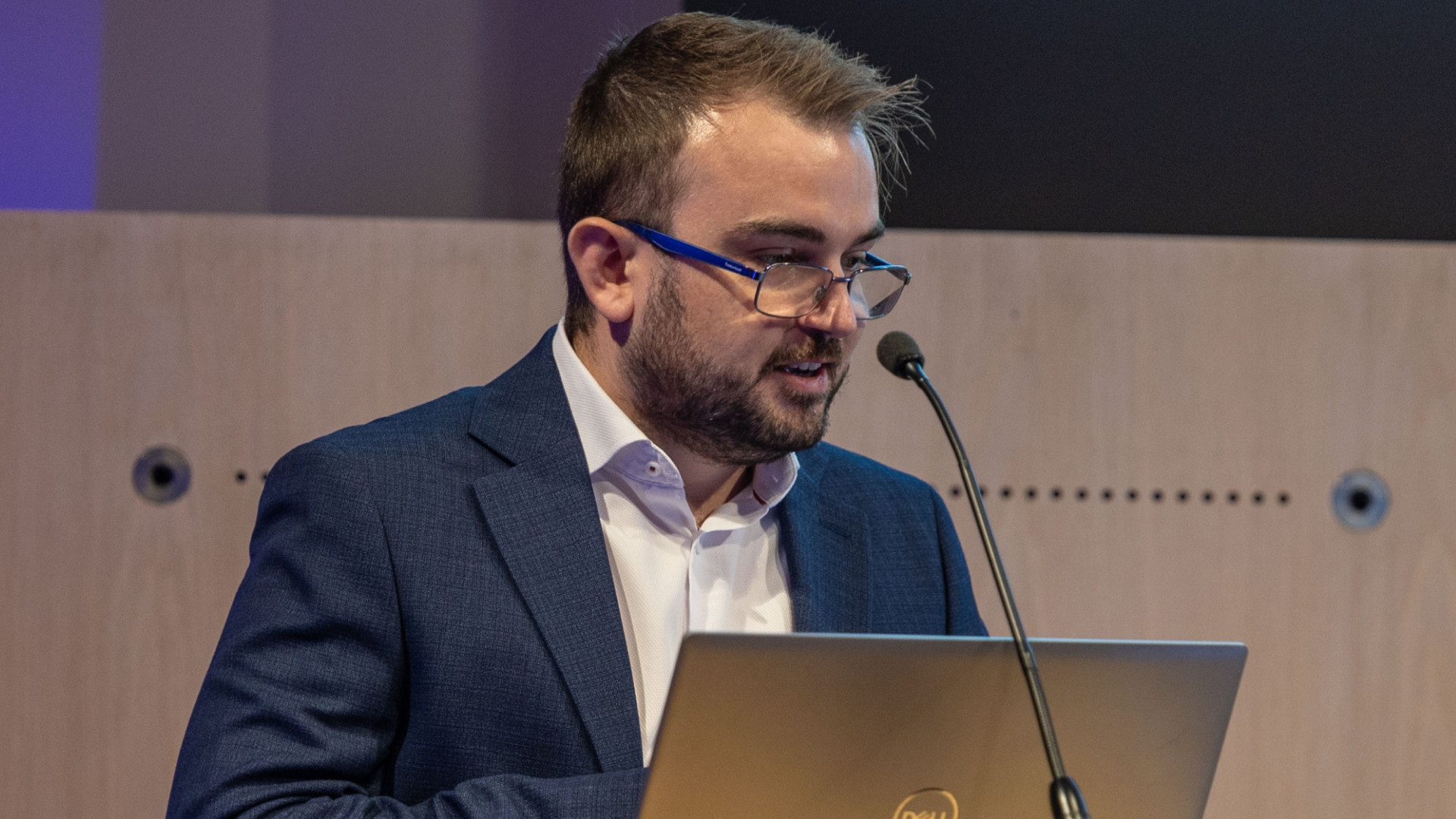

Why every moment matters: A message from Dr Miles Payling

Dr. Miles Payling
At the inaugural C the Signs Conference, Dr Miles Payling - Co-Founder and Chief Scientific Officer - delivered a message that captured the heart of a movement reshaping how the world detects cancer.
He spoke about science, yes. But more importantly, he spoke about people. About time. About the moments we can give back when cancer is found sooner.
“We can’t afford to wait for symptoms to become obvious. Every moment matters - because every moment lost is a choice, a treatment, a life that could have been saved.”
The question that changed everything
Miles shared the story that shaped the mission behind C the Signs.
As an NHS doctor, he met a patient named Joe - active, fit, and 60 years old. After several GP (primary care) visits with vague symptoms, Joe arrived at hospital jaundiced and unwell. Scans confirmed metastatic pancreatic cancer.
Three weeks later, Joe died.
“Joe never asked, why do I have cancer? What he asked was, why was my cancer picked up so late?”
That question became the foundation of C the Signs - a platform built to help clinicians detect cancer early enough to change the outcome.
Today, that vision makes a measurable difference: a patient with cancer detected every 22 minutes.
Each one represents a life identified sooner - and a future that’s less defined by fear.
Why early detection still falls short
Cancer remains one of the leading causes of death worldwide. Survival still depends heavily on the stage at diagnosis.
- Breast cancer five-year survival falls from 97.9% at stage 1 to 26.2% at stage 4.
- Bowel cancer falls from 91.7% to 10.3%.
- Yet only around 58% of patients are diagnosed at an early stage.
In primary care - where most people first seek help - clinicians face enormous pressures:
brief consultations, complex presentations, thousands of patients, and on average only a handful of cancer diagnoses each year. As Miles said in his conference speech:
“The problem isn’t people. It’s knowledge. We need to give every GP the power of precision - instantly.”
Early detection doesn’t fail because clinicians aren’t trying.It fails because cancer is complex, symptoms are subtle, and the time to make sense of them is short. Our platform exists to bridge that gap - offering clinicians timely clarity when decisions need to be made.
Innovation and redefining what’s possible
C the Signs brings together trusted medical evidence, real-time data and AI-powered insight to support clinicians in moments where clarity matters most.
Within seconds, our platform can highlight when a patient may be at risk and guide their doctor toward the right diagnostic pathway - across more than 100 cancer types. But the impact isn’t defined by speed, it’s defined by the lives reached sooner.
Real-world evaluations across the NHS have shown that clinicians using C the Signs are able to:
- identify patients whose symptoms signal concern - even when the signs are hard to spot
- offer reassurance by safely ruling out risk when symptoms are more likely to be benign
- give clinicians clearer insight into where a tumour may have started
- help reduce emergency cancer presentations by half
- shorten the time it takes for patients to reach a diagnosis
Each of these outcomes represents something deeply human: a patient receiving answers earlier,
a family spared uncertainty, a healthcare system given space to care, not catch up.
This is what innovation should do - not stand in the place of clinical judgement, but enhance it. It should deepen insight and make the subtle more visible, so clinicians can act early with the confidence their patients deserve.
The movement, and honouring Jess’s Rule
Miles closed by sharing the story of Jessica Brady - a 27-year-old whose symptoms were subtle, persistent and easy to misinterpret. Despite several visits to her doctor, her cancer was found too late. Her loss is felt deeply, not only by those who loved her, but by clinicians across the country who want every patient to be seen in time.
To honour her legacy, our team is introducing Jess’s Rule - a safeguard within the platform that gently alerts clinicians when a patient returns multiple times with unresolved symptoms, prompting a thoughtful, timely cancer risk assessment.
It’s a small change with a profound purpose: to make sure no patient is ever unintentionally overlooked, and no pattern is missed simply because symptoms are subtle.
As Miles said:
“We can turn tragedy into transformation - by ensuring that no patient is ever overlooked again.”
Jess’s story is a reminder of why this movement matters. Together, we can help make early cancer detection a standard for everyone - not a privilege for a few - and give each person the time, choice and hope they deserve.
Featured
Why every moment matters: A message from Dr Miles Payling
Dr. Miles Payling
At the inaugural C the Signs Conference, Dr Miles Payling - Co-Founder and Chief Scientific Officer - delivered a message that captured the heart of a movement reshaping how the world detects cancer.
He spoke about science, yes. But more importantly, he spoke about people. About time. About the moments we can give back when cancer is found sooner.
“We can’t afford to wait for symptoms to become obvious. Every moment matters - because every moment lost is a choice, a treatment, a life that could have been saved.”
The question that changed everything
Miles shared the story that shaped the mission behind C the Signs.
As an NHS doctor, he met a patient named Joe - active, fit, and 60 years old. After several GP (primary care) visits with vague symptoms, Joe arrived at hospital jaundiced and unwell. Scans confirmed metastatic pancreatic cancer.
Three weeks later, Joe died.
“Joe never asked, why do I have cancer? What he asked was, why was my cancer picked up so late?”
That question became the foundation of C the Signs - a platform built to help clinicians detect cancer early enough to change the outcome.
Today, that vision makes a measurable difference: a patient with cancer detected every 22 minutes.
Each one represents a life identified sooner - and a future that’s less defined by fear.
Why early detection still falls short
Cancer remains one of the leading causes of death worldwide. Survival still depends heavily on the stage at diagnosis.
- Breast cancer five-year survival falls from 97.9% at stage 1 to 26.2% at stage 4.
- Bowel cancer falls from 91.7% to 10.3%.
- Yet only around 58% of patients are diagnosed at an early stage.
In primary care - where most people first seek help - clinicians face enormous pressures:
brief consultations, complex presentations, thousands of patients, and on average only a handful of cancer diagnoses each year. As Miles said in his conference speech:
“The problem isn’t people. It’s knowledge. We need to give every GP the power of precision - instantly.”
Early detection doesn’t fail because clinicians aren’t trying.It fails because cancer is complex, symptoms are subtle, and the time to make sense of them is short. Our platform exists to bridge that gap - offering clinicians timely clarity when decisions need to be made.
Innovation and redefining what’s possible
C the Signs brings together trusted medical evidence, real-time data and AI-powered insight to support clinicians in moments where clarity matters most.
Within seconds, our platform can highlight when a patient may be at risk and guide their doctor toward the right diagnostic pathway - across more than 100 cancer types. But the impact isn’t defined by speed, it’s defined by the lives reached sooner.
Real-world evaluations across the NHS have shown that clinicians using C the Signs are able to:
- identify patients whose symptoms signal concern - even when the signs are hard to spot
- offer reassurance by safely ruling out risk when symptoms are more likely to be benign
- give clinicians clearer insight into where a tumour may have started
- help reduce emergency cancer presentations by half
- shorten the time it takes for patients to reach a diagnosis
Each of these outcomes represents something deeply human: a patient receiving answers earlier,
a family spared uncertainty, a healthcare system given space to care, not catch up.
This is what innovation should do - not stand in the place of clinical judgement, but enhance it. It should deepen insight and make the subtle more visible, so clinicians can act early with the confidence their patients deserve.
The movement, and honouring Jess’s Rule
Miles closed by sharing the story of Jessica Brady - a 27-year-old whose symptoms were subtle, persistent and easy to misinterpret. Despite several visits to her doctor, her cancer was found too late. Her loss is felt deeply, not only by those who loved her, but by clinicians across the country who want every patient to be seen in time.
To honour her legacy, our team is introducing Jess’s Rule - a safeguard within the platform that gently alerts clinicians when a patient returns multiple times with unresolved symptoms, prompting a thoughtful, timely cancer risk assessment.
It’s a small change with a profound purpose: to make sure no patient is ever unintentionally overlooked, and no pattern is missed simply because symptoms are subtle.
As Miles said:
“We can turn tragedy into transformation - by ensuring that no patient is ever overlooked again.”
Jess’s story is a reminder of why this movement matters. Together, we can help make early cancer detection a standard for everyone - not a privilege for a few - and give each person the time, choice and hope they deserve.